Church Wedding Decorations: Ideas and Rules

Author: Magdalena RabaWielki Dzień, a wedding decoration studio in the Tri-City
The church is where you will exchange your vows, and the setting for that moment should be something special. Decorating a church does, however, call for knowing the rules your parish follows and for a good eye, so that the decorations sit harmoniously with the sacred architecture. In this article you will find concrete ideas, costs and practical tips.
1. Rules for decorating a church
Every parish has its own guidelines on decorations. Before you start planning, arrange a meeting with the parish priest or the sacristan and settle the key points.
- Parish permission - some churches require written permission for decorations. Ask about it at least two months in advance.
- No fixing to the walls - in many churches you may not drill, hammer in nails or stick anything to the walls and pillars.
- Flower restrictions - during Lent, floral decorations are usually forbidden or heavily restricted.
- Aisle runner and petals - not every parish allows a runner to be laid down the nave. Scattering rose petals is sometimes banned because they stain the floor.
- Candles - naked flames may need additional permission. LED candles are an alternative.
2. Decorating the altar and sanctuary
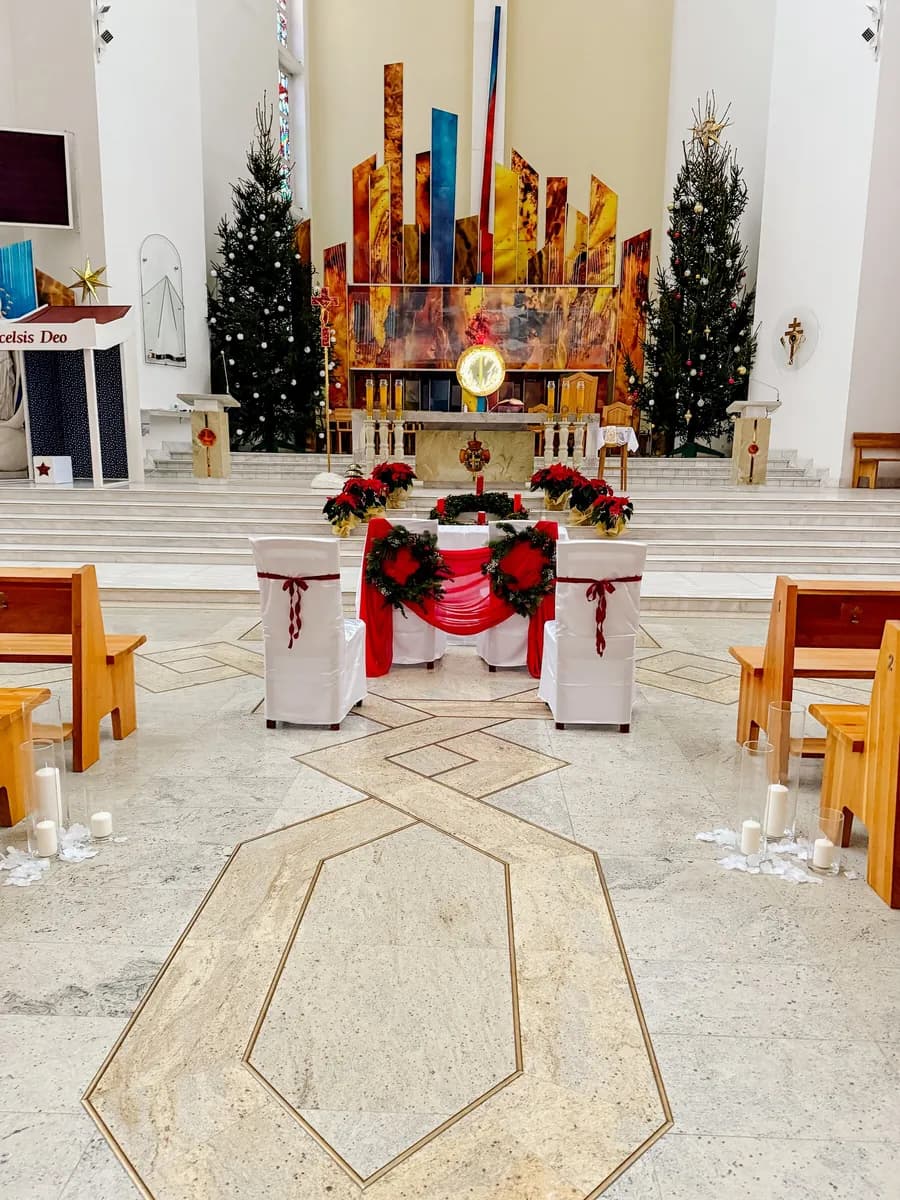
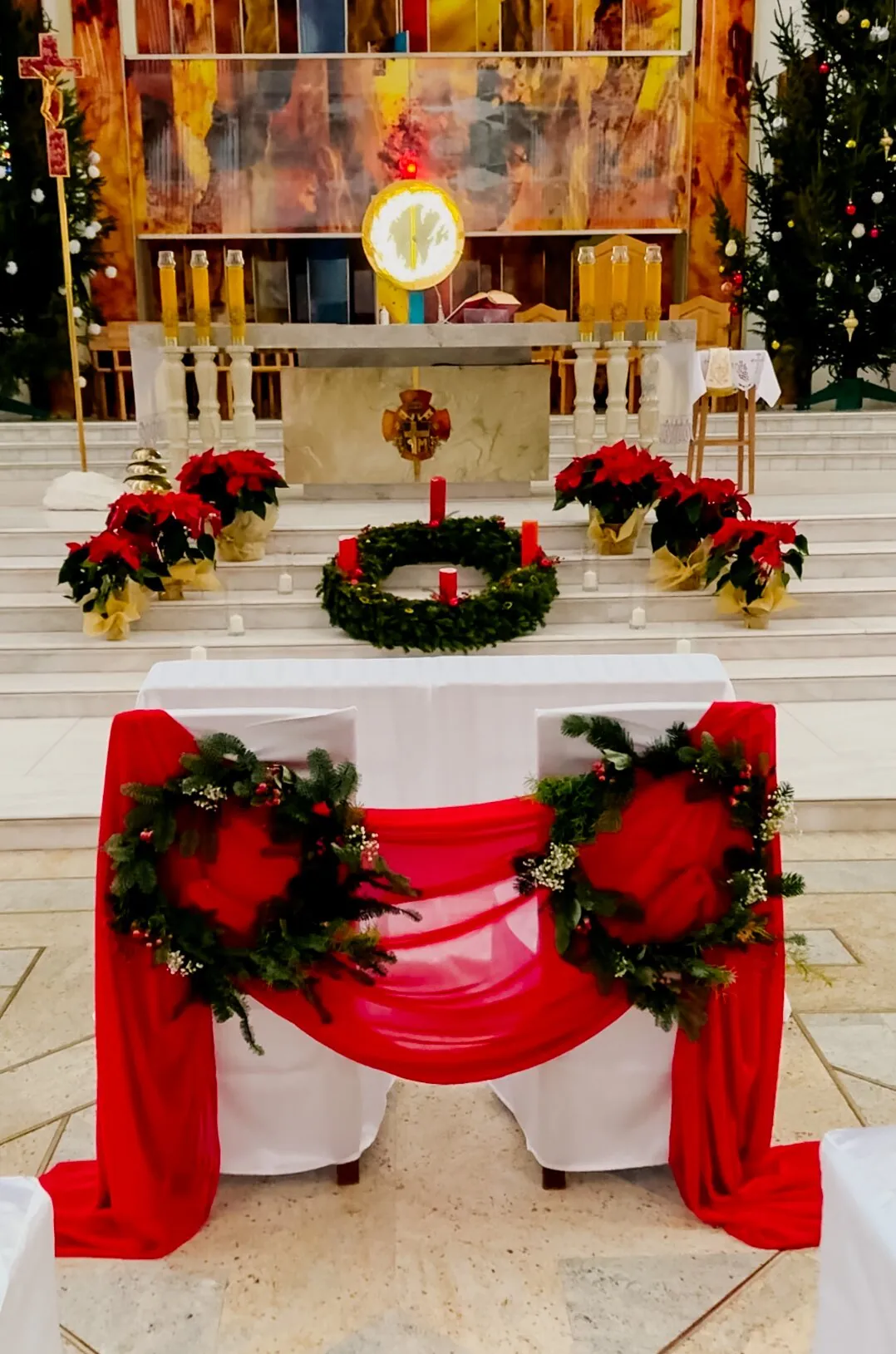
The altar is the focus of attention during the ceremony. The decoration should highlight its beauty rather than hide it. The most common approach is symmetrical floral arrangements on both sides of the altar, in vases on pedestals or directly on the steps.
Popular flowers for altar decorations are white roses, hydrangeas, lisianthus, lilies and peonies. In summer, dahlias and garden flowers also work well. The arrangements need to be suitably large, as ones that are too small get lost in the space of the sanctuary.
If you are planning a church wedding (in Polish), remember that the decorations must be set up and ready at least an hour before the ceremony.
3. Decorating the pews and nave
The pew decorations mark out the path the couple will walk to the altar. Here are some tried-and-tested solutions:
- Bouquets on the pews - small posies tied with a ribbon or jute twine to every other pew.
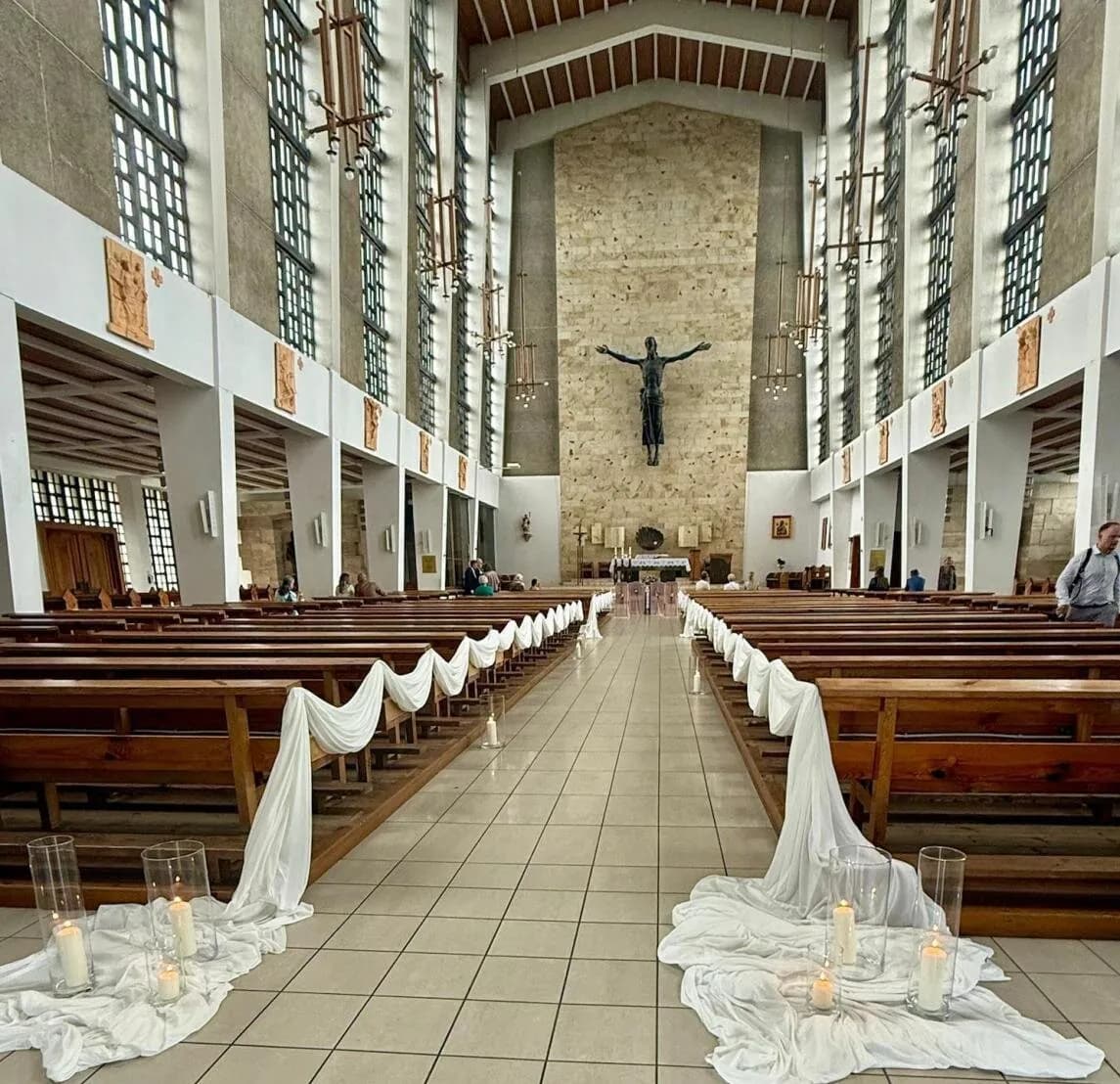
- Lanterns - glass or metal, placed on the floor by each pew. Particularly effective for evening ceremonies.
- Tulle and ribbons - light, airy drapes tied to the ends of the pews in the main colour of your wedding.
- Aisle runner - a white or cream runner laid down the nave gives the ceremony a Hollywood feel.
4. The church entrance
The entrance is the first thing your guests will see, and the last backdrop you will stand in front of for photographs after the ceremony. Large floral arrangements on both sides of the door, an archway of greenery or tulle wound around the columns make a striking setting.
In summer, garlands of fresh greenery (eucalyptus, ivy) wound around the door frame are becoming ever more popular. In winter, fir branches, pine cones and LED fairy lights take their place.
5. The cost of church decorations
The cost of decorating a church depends on the size of the building, the type of flowers and the scope of the work. Rough price ranges:
- Minimal decoration (altar + 4 pews) - 800–1 500 zł
- Standard decoration (altar + pews + entrance) - 1 500–3 500 zł
- Extensive decoration (the whole church + aisle runner + archway) - 3 500–7 000+ zł
It is worth asking the parish whether another wedding is taking place on the same day: by sharing the cost of the decorations with the other couple, you could save as much as 30–50%.